
How Long Does Inground Pool Installation Take in Mississauga in 2026?
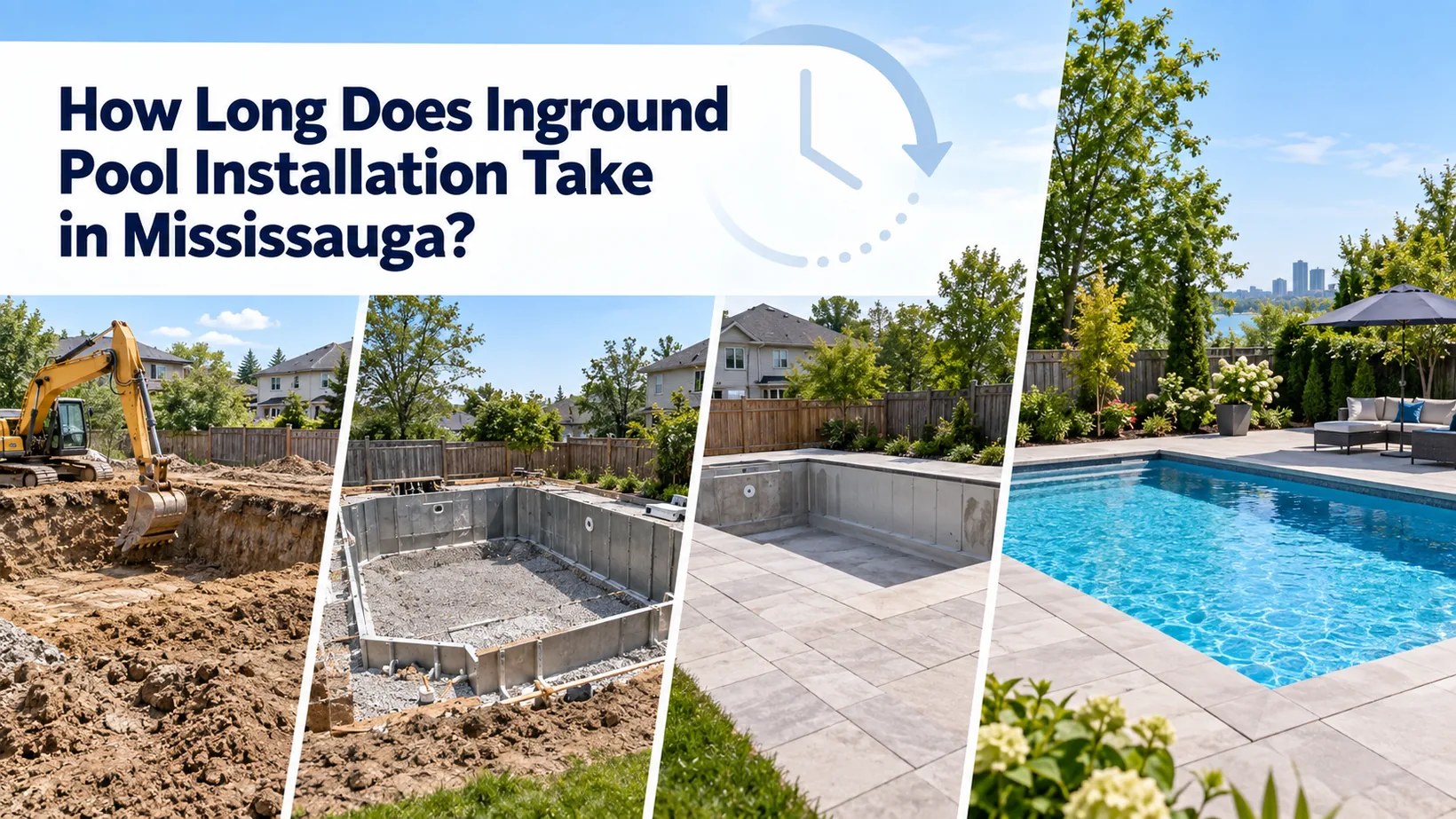
A realistic pool schedule has two clocks: elapsed calendar time and active construction time. Homeowners need both. A crew may complete an individual stage quickly while the project still waits for an approval, product, inspection, trade or suitable weather.
TL;DR
- Many inground builds take roughly 6 to 12 weeks from excavation to completion, but that is not a promise.
- Design, approvals, procurement and utilities add time before excavation.
- Fiberglass is usually fastest on site, vinyl intermediate, and concrete most stage-dependent.
- Weather affects excavation, concrete, liners, finishes, decking and landscaping differently.
- “Complete” means inspected, commissioned and restored, not merely holding water.
The short answer: use a range, then build dependencies
The Pool & Hot Tub Alliance consumer guidance says most inground pools take about 6 to 12 weeks from excavation to completion, with permitting and planning adding time. Pool type, design and weather affect that range.
For a Mississauga homeowner, the most useful schedule divides the job into three periods:
- Preconstruction: design, survey, municipal process, selections, engineering, procurement and trade coordination.
- Site construction: access, excavation, pool structure, plumbing, utilities, backfill and primary hardscape.
- Closeout: enclosure inspection, filling or finish startup, commissioning, landscaping, grading and records.
The middle period may fit a broad 6-to-12-week orientation. The whole customer journey is usually longer and should be planned from design authorization to final closeout.
What must happen before excavation starts?
First establish the pool type, dimensions, depth, equipment, access route, enclosure, deck and grading concept. Prepare the legal survey and scaled site plan required by the City, resolve comments and pay applicable fees and deposits.
Mississauga’s current application instructions say owners must provide required documents and payment before work begins. Property conditions can also trigger tree, conservation, heritage, park-access or road-occupancy requirements.
Product selection affects lead time. A fiberglass shell, liner pattern, coping, equipment, cover or specialty finish may not be available merely because excavation is ready. Confirm release dates in writing and identify which selections are required to hold the schedule.
Public utility locates are another dependency. Ontario One Call’s homeowner information explains how to request public locates, while private services may need separate arrangements. A clear locate record does not replace the contractor’s excavation controls.
Excavation should start only when the approved design, products, crews, access and first follow-on stages are genuinely ready. Opening the ground early does not shorten a schedule if the project then waits exposed.
Typical timing by pool type
No responsible timeline can be reduced to one number, but material choice changes the work sequence.
Fiberglass timeline
The shell is manufactured before delivery. On site, the sequence commonly includes excavation, base preparation, shell delivery and lifting, levelling, plumbing, controlled backfill and filling, equipment, coping or deck, enclosure and commissioning.
This can create the shortest on-site structural period. It also creates a hard logistics dependency: the shell, crane plan, excavation and installation crew must align. Restricted access, high winds during a lift, road occupancy or unsuitable base conditions can interrupt the sequence.
Vinyl liner timeline
A vinyl pool is assembled on site. Work commonly includes excavation, wall or structural assembly, floor preparation, plumbing, backfill, deck preparation, liner measurement or confirmation, liner placement, filling and commissioning.
Its on-site period is generally longer than a straightforward fiberglass placement and shorter than a complex concrete build. Custom dimensions, floor correction, liner delivery, groundwater or deck coordination can move the result.
Concrete timeline
Concrete construction contains more dependent stages: excavation, forming, steel, plumbing, inspections or checks, shell placement, curing, waterproofing or preparation where specified, coping, tile, interior finish, filling and startup.
Calendar time is sensitive to complexity and required cure or readiness conditions. Later work should not be pulled forward simply because the site appears quiet. The specification and product instructions determine when a surface is ready for the next stage.
The dependency calendar
This completed calendar is a planning tool, not a promised production schedule. Replace each broad window with the selected builder’s dates and named predecessor.
| Stage | Illustrative calendar position | Cannot begin until | Release evidence |
|---|---|---|---|
| Design and selections | Weeks 1 to 4+ | Owner brief and survey base | Signed design and selection log |
| Municipal and related approvals | Weeks 2 to 8+ | Complete scaled plan | Acceptance, permits or clearances |
| Procurement and trade booking | Weeks 2 to 10+ | Products and scope confirmed | Supplier dates and trade commitments |
| Site preparation and excavation | Site week 1 | Approvals, locates, access and next crew ready | Start-readiness record |
| Pool structure | Site weeks 1 to 5+ | Excavation accepted | Stage checklist for chosen system |
| Plumbing, equipment and utilities | Site weeks 1 to 7+ | Coordinated rough-ins and products | Test results and contractor records |
| Backfill, coping and primary deck | Site weeks 2 to 9+ | Structure and underground work accepted | Grade and quantity checks |
| Enclosure and inspection | Site weeks 4 to 10+ | Fence and gates complete | Passed inspection or City direction |
| Fill, finish startup and commissioning | Site weeks 1 to 12+ | System-specific readiness and enclosure rule satisfied | Startup log and handover readings |
| Landscape restoration and closeout | Site weeks 6 to 14+ | Heavy work complete and conditions suitable | Grading, sod and deficiency record |
The overlap is intentional. Trades can work in parallel only when they do not compromise safety, access, inspection or completed work. A contractor should be able to explain each overlap and its control.
Filling depends on material and clearance
In Mississauga, the general rule is to pass the final pool-enclosure inspection before filling. Fiberglass is different because water is part of the installation and backfill process. For that method, the municipal guide identifies a temporary enclosure and signed acknowledgement route.
For vinyl, filling commonly follows liner placement and is part of setting the liner correctly. For a plastered concrete pool, filling begins after the interior finish is applied and should proceed according to the finish plan. Municipal enclosure requirements still need to be coordinated before the event.
Water in the pool does not mean the project is ready for use. Circulation, sanitation, electrical and heating systems require commissioning. A new plaster finish also requires a controlled chemistry process.
The PHTA technical note for new plaster begins with a source-water test, keeps the initial fill continuous and sequences chemistry adjustments with brushing through 28 days. The finish manufacturer’s instructions govern the actual project.
How weather affects each method
Rain can soften excavation, increase groundwater management, delay base acceptance and damage access routes. It can also prevent soil compaction or landscape work. One dry day does not immediately restore suitable ground conditions.
Temperature and moisture affect concrete placement, curing, coatings, adhesives, liners, sealants and landscape materials in different ways. The relevant product specification should establish the acceptable window. Generic claims that one material is “all-weather” are not a substitute for stage-specific limits.
Wind matters during fiberglass lifting and can affect dust, covers and some finish operations. Extreme heat changes worker exposure, evaporation and finish-startup demands. Early or late season work may remain practical, but the schedule should include weather decision points rather than optimistic blank space.
Record whether a weather delay moves only one task or the full critical path. Landscaping can sometimes shift while mechanical commissioning continues. A failed base condition may hold several downstream stages.
Other causes of schedule drift
Incomplete decisions
A missing coping, equipment or deck selection can stop procurement and detail coordination. Use a decision register with a required-by date, owner, available options and effect of delay.
Unverified access or soil
Machine restrictions, export volume, rock, groundwater or unsuitable soil can change work methods. Investigate visible conditions, define allowances and agree on evidence for extras before excavation.
Design changes after approval
Moving the pool or changing grades can affect the enclosure, drainage, utilities and municipal plan. Treat revisions as schedule events with written approval consequences.
Trade handoff gaps
Pool, electrical, gas, fence and landscape teams need common reference drawings. A verbal handoff can create rework even when each trade arrives on time.
Premature completion claims
A pool may hold water while the gate, deck, grading, startup or records remain incomplete. Link final payment and closeout to a defined acceptance list.
What homeowners can control
Approve the design and material selections by agreed dates. Provide timely access to the property and keep the construction route clear. Make one person responsible for decisions so the site team is not receiving conflicting instructions.
Ask for a weekly dependency update containing:
- work completed and evidence recorded;
- the next two stages and their prerequisites;
- owner decisions due;
- products or trades not yet confirmed;
- weather-sensitive tasks;
- inspections, tests and municipal actions;
- any change to the forecast completion window.
When assessing Mayascapes Pools, ask whether pool and landscape scheduling uses one dependency plan rather than separate promises. Integrated responsibility can reduce handoff gaps, but only if the milestones, exclusions and acceptance evidence are documented.
The owner can also protect the start date by freezing optional changes before procurement. Keep a wish list outside the approved construction set and price it separately. If an upgrade is accepted, require a revised product date and critical-path effect rather than preserving an obsolete completion forecast.
Set a response window for questions and a backup decision-maker for travel periods. Fast answers help only when they are documented and issued to every affected trade.
Photograph concealed work before it is covered, and keep test results with the schedule. Reliable evidence can prevent a later verification delay or unnecessary reopening of completed areas.
Define the finish line before signing
Write a project-specific completion definition. It may include passed enclosure inspection, operating circulation and sanitation, heater and lighting tests, startup records, accepted coping and deck, restored drainage, finished sod or planting, owner training, warranties, keys, manuals and deficiency resolution.
Distinguish substantial use from administrative closeout if the contract uses those concepts. State which seasonal landscape work may remain and how it will be secured and scheduled.
A realistic completion date is therefore a forecast with dependencies, not a sales-day promise. Update it when a predecessor changes, and preserve the reason.
Installation timeline questions
How soon after excavation does a pool shell go in?
It depends on the pool system and site readiness. Fiberglass placement may follow quickly when the base, shell and lift team are ready. Vinyl and concrete require their respective on-site structural stages. The schedule should name the predecessor rather than promise a universal number of days.
Can landscaping begin before the pool is finished?
Some work can overlap if it does not block access, conceal work awaiting review or risk damage. Heavy pool operations, final grades and underground utilities should be coordinated before finished landscaping is installed.
Does rain delay every pool project equally?
No. Its effect depends on the stage, soil, access and construction method. Excavation and base work may be more sensitive than an indoor equipment task, while concrete or finishes have their own weather limits.
Is the pool complete when it is filled?
No. Filling can occur before commissioning, startup, deck, landscape restoration or final records are complete. Use the written completion definition for the project.