
Vinyl Inground Pool Installation in Mississauga in 2026
TL;DR
- Vinyl pools use a structural wall and floor system with a fitted, replaceable liner.
- Confirm shape, steps, depth and liner details before final pricing.
- Compare excavation, walls, floor, plumbing, coping, deck and restoration separately.
- Read wall, liner, equipment and workmanship warranties as different commitments.
- Plan for liner care and eventual replacement without assuming a universal lifespan.
A vinyl inground pool can suit a homeowner who wants adaptable on-site geometry and a smooth liner interior. The decision includes both the initial structure and a future liner-replacement cycle, so design, installation and ownership costs should be considered together.
How is a vinyl inground pool built?
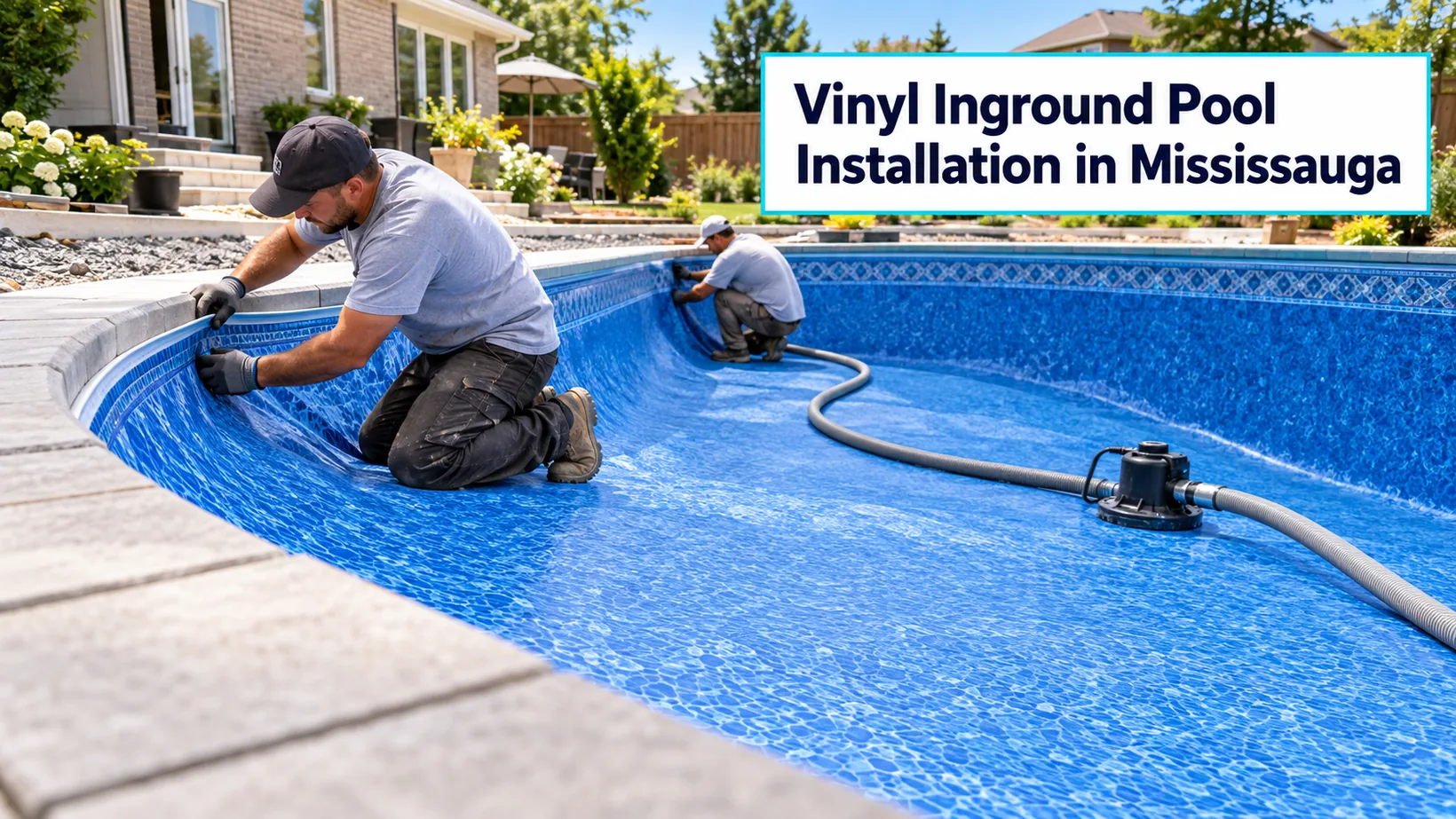
A vinyl pool is not simply a hole lined with flexible material. The system combines structural wall panels, bracing, a prepared floor, coping or liner track, plumbing, steps and a custom-fitted liner. The wall and floor hold the intended geometry; the liner creates the water-containing interior surface.
Typical construction moves through layout, excavation, wall assembly, bracing, plumbing, floor preparation, coping or track work, liner installation, filling, equipment commissioning and deck completion. The exact order and specifications depend on the selected system and site.
Ask the builder to name the wall material, bracing, floor material, step system, liner manufacturer, thickness designation, seam method and coping detail. “Vinyl pool package” is too broad for a meaningful comparison.
Who should consider vinyl?
Vinyl deserves consideration when the household wants a tailored shape, comfortable liner surface and the ability to replace the interior finish without rebuilding the complete structure. It can support rectangles, curves, steps and other configurations within the chosen wall and liner system.
The Pool & Hot Tub Alliance pool-type guide describes vinyl as a comparatively affordable, quick-to-install inground option available in varied shapes. Those are general category traits, not a promise for a particular Mississauga project.
Vinyl may be a weaker fit when the owner does not want a future liner decision, when a desired feature is not supported by the proposed system, or when the quote does not define how the walls, floor and liner work together.
Compare concrete and fiberglass using the same finished-yard scope. A lower pool-package price may not remain lower after access, utilities, decking, enclosure and landscaping are included.
Design the pool around use and future service
Begin with swimming and circulation needs. Record desired length, depth, entry, shallow activity area, seating and deck movement. Ask how the wall layout, floor profile and liner fit deliver those needs.
Review these design fields:
| System decision | Question to resolve |
|---|---|
| Wall structure | Steel, polymer or another specified system? |
| Shape and size | Standard layout or engineered custom configuration? |
| Floor profile | Shallow depth, transition and deep area? |
| Entry | Thermoplastic steps, vinyl-over steps or another system? |
| Liner | Manufacturer, pattern, specification and current warranty? |
| Coping | How does the liner track meet the deck? |
| Future access | What deck or coping work may be needed for replacement? |
Choose colours and patterns from current physical samples because screens and printed brochures can shift their appearance.
Future replacement should influence the initial detail. The coping, liner track, steps and deck edge should allow a qualified service team to measure, remove and install a liner without avoidable demolition.
Check the Mississauga property before fixing the layout
The legal survey and grading conditions control the usable area. Plot boundaries, rights-of-way, buildings, vegetation, services, drainage, fencing and the mechanical area before treating a concept as final.
Mississauga’s pool installation process requires municipal acceptance and the applicable payments in advance. Applicants document survey boundaries, present and proposed drainage elevations, and the planned enclosure. Trees, conservation lands or public-space use may trigger other approvals.
Approved grading and drainage must be maintained, so deck elevations, soil movement and restoration belong in the plan.
Ask who prepares the plans, submits revisions, pays each fee or deposit and schedules inspections. Put the answers in the quote.
What site and access issues affect installation?
Walk the route from the street to the pool. Measure openings and note turns, slopes, fences, air-conditioning equipment, eaves, overhead wires and neighbouring property. Identify where the excavator, wall components, floor material and exported soil will move.
Vinyl components can reach some constrained yards in smaller pieces, but excavation and soil removal still need a practical route. Narrow access may increase trips and restoration.
Map services before the excavator arrives. Ontario One Call’s guidance for homeowners covers the public notification route but warns that certain owner-controlled lines may need another locator. Assign each request and include existing pool, landscape-lighting and irrigation services.
The proposal should state fence removal, access protection, soil-export assumptions, difficult-ground pricing, cleanup and restoration. Do not assume these tasks are part of the wall-and-liner package.
What should the installation sequence document?
A clear vinyl construction plan should identify the controlling specification at each stage:
- Approved layout and finished elevations.
- Access preparation and excavation.
- Wall placement, assembly, bracing and level checks.
- Steps, skimmers, returns and plumbing rough-in.
- Structural backfill and deck preparation where applicable.
- Floor shaping and surface preparation.
- Liner measurement, fitting and installation.
- Controlled filling and equipment startup.
- Coping, deck, drainage and landscape completion.
- Inspections, owner training and document handoff.
Ask who inspects wall alignment, floor condition and liner fit before filling. Follow written guidance before draining because liner condition, groundwater and structure can affect the method.
Compare quote inclusions by system component
An itemized vinyl proposal should identify the wall system, bracing, floor, steps, liner, coping and fittings. List each circulation, heating, water-treatment, illumination and automation component instead of using an equipment-package label.
Add rows for:
- design, site plan and municipal administration;
- excavation, material hauling, difficult geology and water control;
- access removals, protection and restoration;
- circulation lines, leak testing and the mechanical-area base;
- electrical and gas work;
- liner supply, fitting and startup;
- coping, deck area, base and drainage;
- fencing or enclosure changes;
- sod, planting and irrigation repair;
- cleanup, training and closeout documents.
Mark each row included, excluded, allowance or unknown. Ask for a revised quote that resolves unknowns before signing.
What affects vinyl pool cost in Mississauga?
Shape and size affect structure, liner area and excavation. Steps, benches, equipment, covers, coping and decking add different trade requirements.
Property conditions can matter just as much. Narrow access, disposal volume, difficult digging, water management, retaining structures, distant utilities, street use and restoration can change the complete-project cost.
For every allowance, request the assumed quantity and adjustment rule. Excavation pricing needs a method for unexpected material. Hardscape pricing needs dimensions and assembly details. Utility pricing needs distance and connection points.
Compare the total required to reach the same completion point, not the advertised package. Include owner-paid approvals and contracted work that another bidder leaves outside its scope.
How long does a liner last?
There is no responsible single lifespan for every liner. Water chemistry, temperature, sunlight, winterization, fit, groundwater, use and physical damage can all affect service life. Warranty duration is also not a prediction of useful life.
Ask the builder for the manufacturer’s care requirements and the evidence behind any lifespan estimate. Treat an estimate as a planning range with stated conditions, not a promised replacement year.
Build a reserve plan from a current replacement estimate. Identify excluded water, repairs or coping access, review the amount periodically and arrange inspection when fit, brittleness, leaks or damage raise concern.
Keep the pool full and maintained as instructed. Do not puncture the liner with improvised repairs or drain the pool without qualified guidance.
What does a vinyl warranty cover?
Separate at least four commitments: the wall system, liner, equipment and builder workmanship. Each may have a different provider, term, registration process and exclusion list.
The current Latham warranty information page lists Canadian inground-liner and wall-system documents separately. It shows why a headline term needs context: liner coverage can include full and prorated periods, while structural components have their own terms.
For the exact quoted products, record:
- covered defect and excluded damage;
- full versus prorated periods;
- transfer and original-purchaser conditions;
- required water care and documentation;
- registration and claim deadlines;
- labour, water, freight and removal costs;
- first contact for a claim.
Ask the builder’s workmanship warranty to address wall assembly, floor preparation, plumbing, liner fitting and any coordinated deck work within its actual scope. Do not assume the product manufacturer covers installation.
Prevent avoidable liner problems
Follow the manufacturer’s water-balance, cleaning and winterization instructions. Use tools intended for vinyl surfaces and keep sharp objects away from the pool. Address leaks promptly because water moving behind the liner can affect fit and the floor.
Ask a qualified service provider about wrinkles, leaks, stains or water-level changes. Keep water-test records, product documents, invoices and photographs for maintenance and possible claims.
Coordinate the pool with the finished backyard
Mayascapes Pools designs and installs vinyl inground pools in Mississauga and can coordinate pool construction with coping, interlocking or other hardscape and landscape work. That integrated scope is most useful when grades, drainage, deck transitions and access restoration appear on one plan.
Ask Mayascapes to identify the proposed wall and liner systems, exact deck quantity, drainage approach, responsible trades and separate warranty providers. One coordinator should improve accountability, but it should not collapse distinct scopes into a vague total.
Request a comparable project with similar access and deck conditions, then ask how changes and handoff were handled.
Handoff and future replacement records
At closeout, inspect coping, liner fit, steps, fittings, deck drainage, equipment and restored access. Confirm the enclosure certificate and whether the City still needs to review final elevations or adjacent municipal land.
Collect liner and wall documents, equipment serial numbers, warranties, registrations, settings and service contacts. Ask for water-care and winterization instruction.
Keep the original plan and construction photographs. A future liner technician may need the pool dimensions, step details, fitting positions and previous repair history.
Is vinyl the right pool for your Mississauga home?
Vinyl is a practical choice when its wall, floor and liner system delivers the desired shape and the owner accepts a future liner-replacement decision. Mississauga approvals, property access and finished grading remain central regardless of the pool package.
Mayascapes can bring the pool, deck and landscape into one coordinated scope. The final decision should still rest on an itemized quote, current product documents and clear responsibility for installation, care and future service.
Vinyl pool ownership questions
Can a vinyl pool have custom steps and benches?
Many systems support varied entry and seating options, but availability depends on the wall, step and liner design. Confirm the exact detail and warranty before finalizing the shape.
Is a thicker liner always better?
Not by itself. Material specification, fit, seams, installation, water care and warranty terms all matter. Compare the exact manufacturer document rather than one thickness label.
Can a vinyl pool be emptied for cleaning?
Do not drain it without qualified advice. Groundwater, liner age and fit can create risks, and the manufacturer or installer may require a specific process.
Who replaces the liner later?
Use a qualified pool professional familiar with the wall, track, steps and measurements. Ask the original builder what records it retains and whether deck or coping work may be required.